
Supporting children with special needs requires clear communication, patience, and tools that help them understand the world around them. One of the most effective tools used across schools and therapy settings is the social story — a simple, structured way to teach skills, routines, and safe behaviour.
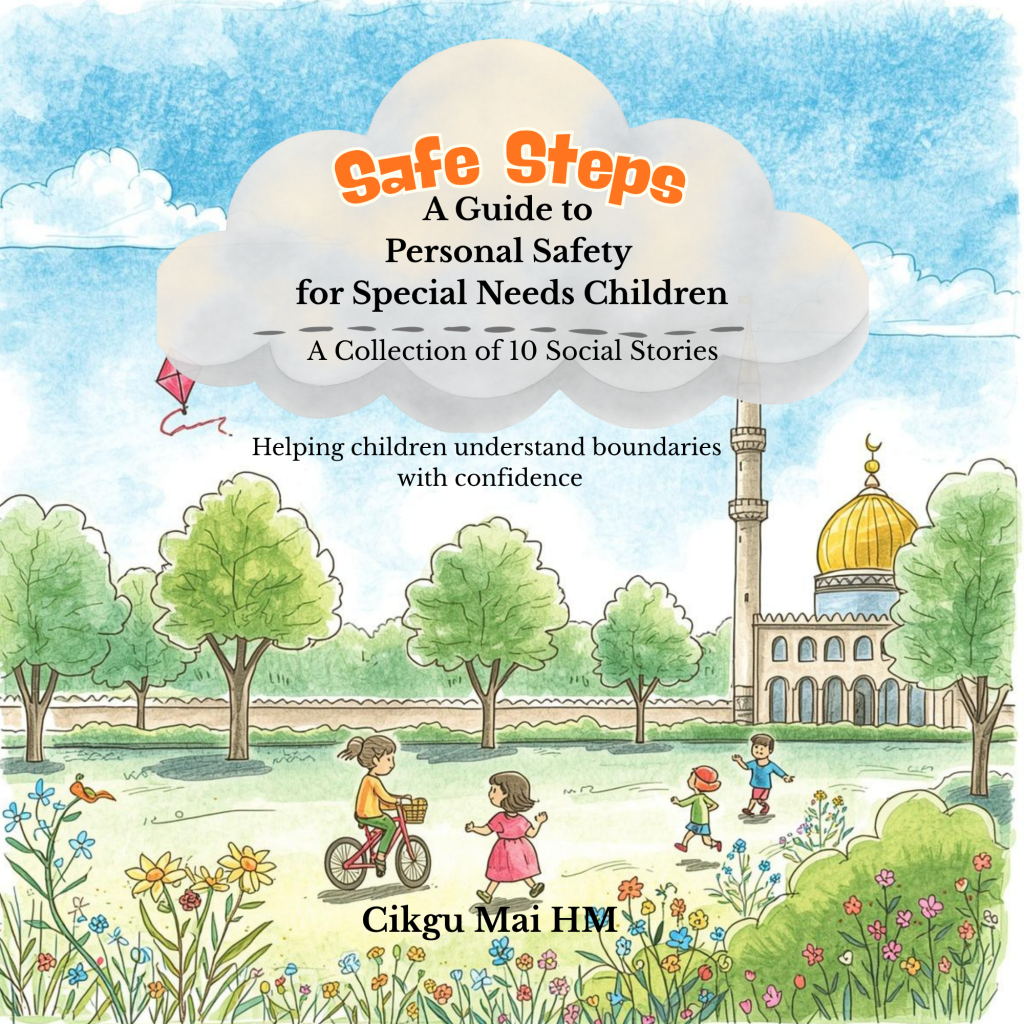
This article introduces what a social story is, why it matters, and how the Safe Steps on Personal Safety guidebook was created to help children learn essential safety skills with confidence.
🌟 What Is a Social Story?
A social story is a short, simple, and clear explanation of a situation, skill, or behaviour.
It uses child‑friendly language, illustrations, and step‑by‑step guidance to help children understand what to expect and what to do.
Social stories are especially helpful for:
- children with autism
- children with developmental delays
- children who need predictable, structured instructions
- children who learn best through repetition and visuals
A social story answers three important questions for the child:
- What is happening?
- Why does it happen?
- What should I do?
By breaking down everyday situations into calm, manageable steps, social stories help children feel safe, prepared, and confident.
🌼 The Purpose of the “Safe Steps” Guidebook
The Safe Steps on Personal Safety guidebook was created to support special needs children in Brunei Darussalam — helping them understand boundaries, recognize unsafe situations, and know what to do when they need help.
The intention is clear:
✔ To empower children with knowledge
The book teaches what to do in situations that may be confusing, unsafe, or overwhelming — such as strangers talking to them, someone asking them to keep a secret, or seeing something uncomfortable.
✔ To build independence
Each social story gives children simple steps they can follow on their own.
This helps them build confidence and develop real‑life safety skills.
✔ To provide parents and teachers with a practical tool
Adults can read the stories with children, model the steps, and practice them regularly.
This strengthens learning and makes the lessons part of the child’s everyday routine.
✔ To offer emotional and physical safety
The stories gently address sensitive topics while ensuring the child feels supported and understood.
📘 What’s Inside the Guidebook?
The book contains 10 carefully crafted social stories, each focusing on an important safety situation:
- When someone stands too close
- Saying “no” when something feels wrong
- Handling interactions with strangers
- Asking for help with clothing
- Using the toilet safely at school
- When someone asks them to keep a secret
- Feeling confused about their body
- Seeing something uncomfortable
- Staying safe on the internet
- Seeing someone being treated badly
Each story uses:
- simple sentences
- clear illustrations
- predictable structure
- gentle emotional validation
- a positive, encouraging ending
These features make the guidebook accessible to children with different learning levels.
💛 Why This Guidebook Matters
Personal safety can be difficult to teach, especially to children with special needs.
They may struggle with:
- understanding social cues
- managing big emotions
- identifying unsafe situations
- asking for help
- remembering what to do next
This guidebook provides calm, consistent guidance to support them.
It is more than a book —
it is a tool for safety,
a tool for communication,
and a tool for empowerment.
🧑🏫 How Adults Can Use This Guidebook
Parents, teachers, and caregivers can:
- read the stories aloud
- revisit them regularly
- role‑play the steps
- use the pictures to support understanding
- pause and discuss feelings
- celebrate small successes
Repetition builds confidence — and confidence builds safety.
🌈 A Message of Care
The Safe Steps guidebook was created with love and dedication to the special needs community in Brunei.
It is a reminder that:
Every child deserves to feel safe.
Every child deserves tools that work for them.
Every child deserves to be understood.
The world is truly better because they are in it — exactly as they are.
 Safe Steps
Leave a comment